Relational Strategy

Most organisations understand their structure. Few understand the human system operating inside it.
The Hidden Problem
Misalignment between leaders. Invisible tensions within senior teams. Unspoken dynamics that shape every meeting, every decision, every attempt at change — and yet never appear in a strategy document or a performance review.
These forces operate beneath the surface of strategy, culture, and performance. And because they're rarely named, they're rarely resolved.


Misalignment between leaders

Invisible tensions within senior teams

Unspoken dynamics

The Hartley Relational Intelligence Framework™
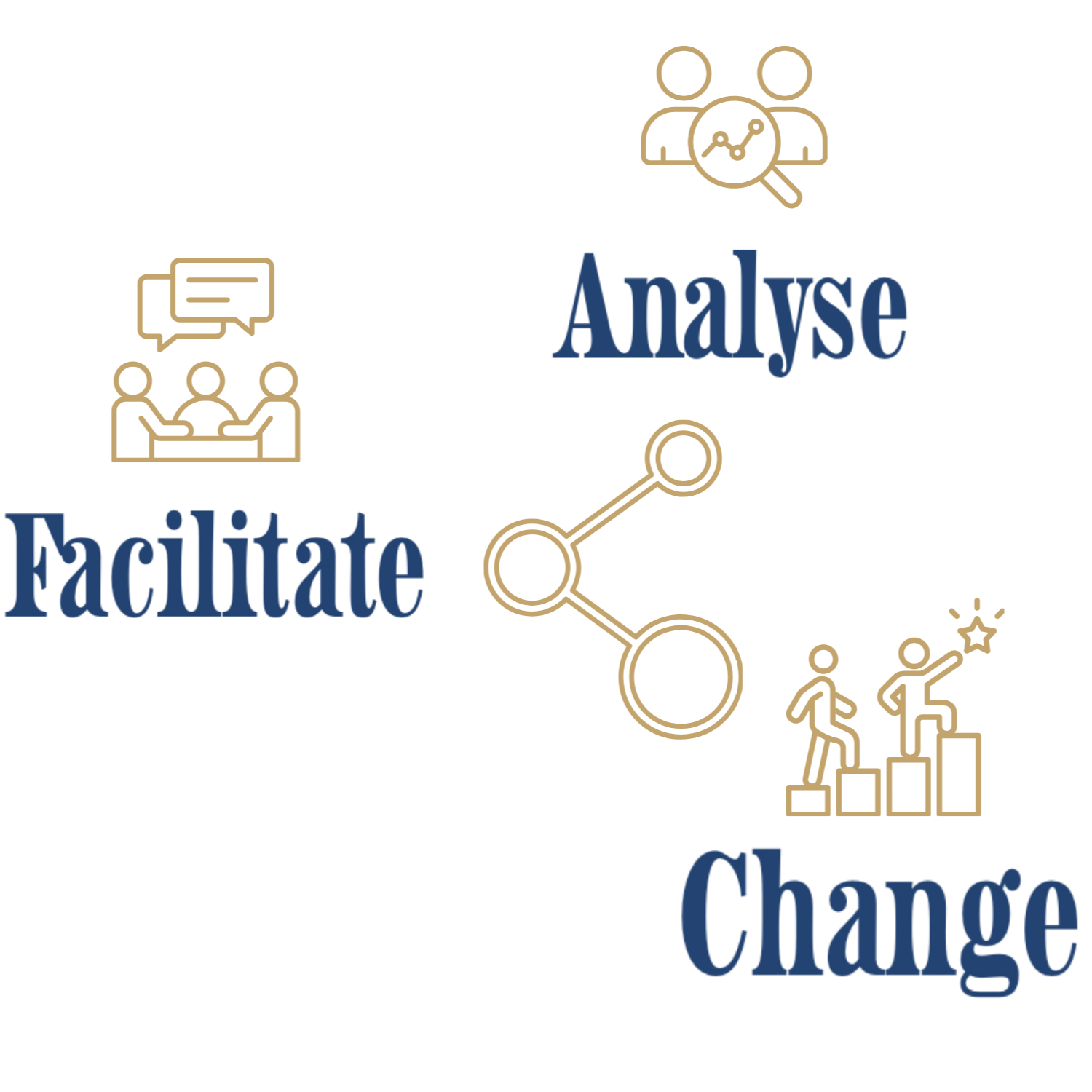
Relational Strategy, guided by the Hartley Relational Intelligence Framework™, is the disciplined practice of understanding and transforming these leadership and team dynamics.
Through in-depth qualitative inquiry, structured analysis, and facilitated dialogue, I help leadership teams surface the hidden relational patterns shaping how their organisation actually functions.
When those patterns are understood and named, leaders gain the clarity needed to move faster, make better decisions, and work together with greater trust and effectiveness.
What is Relational Strategy?

Most consulting interventions assume that if the strategy is right, execution will follow. But execution is a relational act. It depends on who trusts whom, who speaks and who withholds, who takes ownership and who protects their ground.
Relational Strategy addresses that layer directly.
Why do capable leadership teams still struggle with alignment — even when everyone appears committed to the same goals?
Why do certain tensions persist despite repeated conversations and good intentions on all sides?
Why does decision-making slow down precisely when pace matters most?
What is the relational dynamic quietly limiting this team's full contribution?
And what would it take to change it?
Often the answers lie not in formal structures, but in:
The relational architecture of the organisation.
Relational Strategy examines that architecture and helps leaders strengthen it.
The Problems This Work Solves
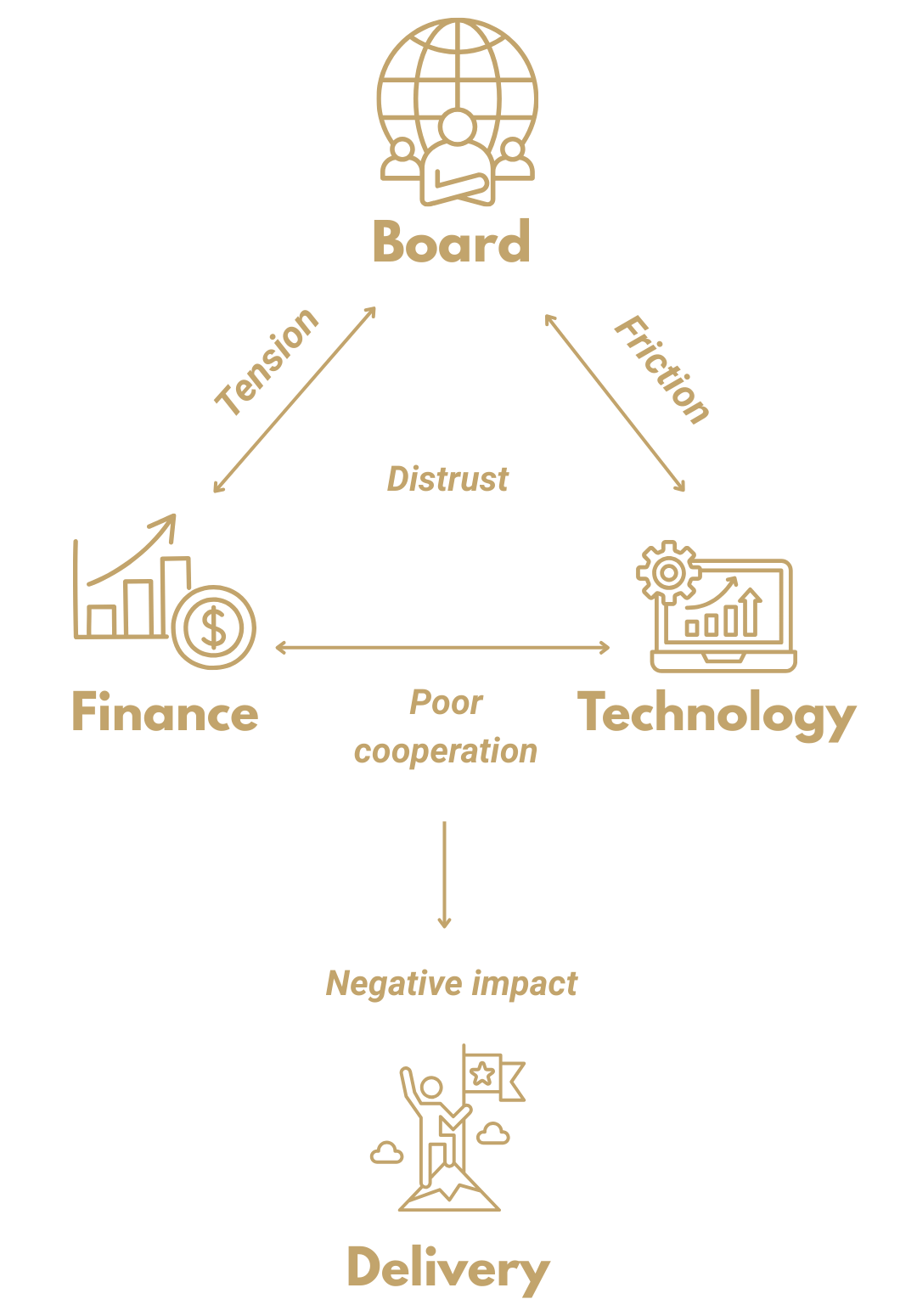
Leaders often sense relational issues long before they become visible.
You might notice:
A team that lacks candour or psychological safety
Unspoken tensions or reputational friction
Historical misunderstandings that persist despite good intent
Decision-making slowed by politics, misalignment or avoidance
Invisible relational labour carried by a few individuals
Change losing momentum due to an absence of trust or resistance
Protectionism replacing genuine collaboration
These challenges are common in high-performing organisations because:
Technical capability often outpaces relational development.
Relational Strategy brings these dynamics into view and helps leaders address them constructively.
The Hartley Relational Intelligence Framework™

My work is directed by The Hartley Relational Intelligence Framework™ — a practice-derived organising model developed through years of psychotherapeutic practice, leadership consulting, and qualitative research.
The framework examines how leaders experience and navigate relational dynamics across several domains.

-
Examines how recognition, legitimacy and influence are experienced across the team — how this shapes confidence, authority and contribution, and where competitiveness is serving collective performance or quietly undermining it.

-
Explores the conditions that allow people to speak honestly, challenge well, and collaborate openly. The aim is to understand whether honesty functions as a driver of creativity and learning, or whether it's being suppressed by fear of conflict, judgment, or relational cost.

-
Examines how the team or organisation is perceived — internally and externally — and whether those perceptions are serving or limiting its effectiveness. It considers how team identity is formed and communicated, and whether reputational dynamics are building credibility or creating drag on trust and influence.


-
Reveals how relational strain is distributed across the team, including the often invisible work required to maintain cohesion, manage upward, and sustain momentum under pressure. It surfaces where the burden of holding things together is concentrated — and what that costs over time.
-
Examines where responsibility, ownership and decision-making are clear — and where blurred boundaries are creating friction, duplication, or stalled progress. It surfaces the unspoken negotiations around territory and authority that often sit beneath apparent collaboration.
What Engagement
Looks Like

Relational Inquiry
Confidential one-to-one conversations with key leaders to understand their lived experience of working within the organisation. These conversations are qualitative and phenomenological in approach — meaning I'm interested in meaning, not just behaviour. This stage surfaces perspectives that rarely emerge in formal meetings or through survey questionnaires.

Pattern Analysis
Insights from these conversations are analysed to identify recurring themes, tensions, and opportunities.
The aim is not to diagnose individuals, but to understand patterns within the relational system.

Strategic Dialogue
Key themes are brought back to leadership teams through facilitated workshops or leadership circles.
This creates a structured space for honest reflection, alignment, and collective problem-solving.

Integration
Insight becomes action through structured facilitated work — leadership circles, workshops, and facilitated team sessions designed to shift how the team actually operates together, not just how they agree to.
This might involve a monthly leadership circle that creates an ongoing reflective space for the team, a workshop that addresses a specific relational or strategic challenge directly, or a series of facilitated sessions that embed new ways of working over time.
The aim is not a report that sits on a shelf. It is a targeted intervention to create a measurable shift in how the team communicates, decides, and leads together under pressure.
How I Work

The way I structure engagements is deliberate, and worth being explicit about — because in several respects it is the opposite of how most consulting works.
Deliberately contained. Every engagement has a defined scope, a defined output, and a decision point. Nothing rolls forward by default. You will always know what you’ve commissioned, what it costs, and when it ends.
No leverage. When you engage me, you get me. There is no team behind the proposal, no juniors the work is delegated to, no model that requires selling you more people. The person you meet is the person in the room — every interview, every session, every time.
Designed to be left. The aim of my work is a team that needs me less, not more. Success looks like a leadership team carrying its own conversations — challenging well, repairing quickly, working its tensions without a facilitator in the room. I build towards my own redundancy, and I say so from the start.
Transparent by method. You will always know what I did, how I read what I found, and why I’m recommending what I’m recommending. The analysis is shown, not asserted. When a conclusion lands hard, it lands because it’s accurate — not because it serves the next phase of work.
These aren't service standards. They're the structure that makes the truth-telling possible — because advice is only worth trusting when the person giving it is working towards the end of the engagement, not its constant extension.
Senior Advisory
For some leaders, the relational strategy process marks the beginning of an ongoing relationship. Where there is value in retaining an external perspective with deep organisational context, engagements can develop into a Senior Advisory arrangement — a standing monthly relationship at consulting rates. If you'd like to understand what that looks like, you can read more here.
Who This Work Is For

The organisations I work with are typically high-performing environments where expectations are high and relational complexity is significant.
Relational Strategy is most valuable when the problem is real, the stakes are high, and the usual interventions haven't reached it. Such as:
A leadership team navigating significant organisational change or a major acquisition
A senior hire that isn't integrating as expected
A period of rapid growth where relational complexity has outpaced the team's capacity to manage it.
Persistent misalignment that survives every strategy away-day
A high-performing team that has quietly stopped being honest with each other.
Example Outcomes
While every organisation is different, engagements often lead to the following

Greater clarity and alignment within leadership teams

Faster and more confident decision-making

Reduced friction between departments or leaders

Increased psychological safety and openness

More sustainable leadership dynamics under pressure

Stronger organisational trust and collaboration
Ultimately, relational strategy helps organisations operate with greater coherence, effectiveness, and human intelligence which then optimises performance.
Trusted by leaders in

“Yesterday went down exceptionally well — the team all commented how much they got out of it. We’d love to invite you back, James, for a deeper dive on creating supportive cultures for leaders. I’d also like some 1-2-1 sessions for me to help me build for what is going to be a challenging 2026 full of change”
- Rich Corbridge, CIO. SEGRO PLC

“We engaged James during a significant period of corporate change to support our team. His work helped strengthen resilience, sharpen thinking, and gave people space to reflect and connect with a sense of purpose whilst operating under pressure. He brought a calm, insightful presence and added real value at an important time.”
- Rich Bradley, Executive Technology and Data Leader at Mars Snacking
Explore a Relational Strategy Conversation
If something on this page has named a dynamic you recognise — in your team, your organisation, or your own leadership — I'd welcome a conversation.
Initial conversations are confidential and exploratory. The focus is on understanding your context and whether this work is the right fit — not on selling a programme.